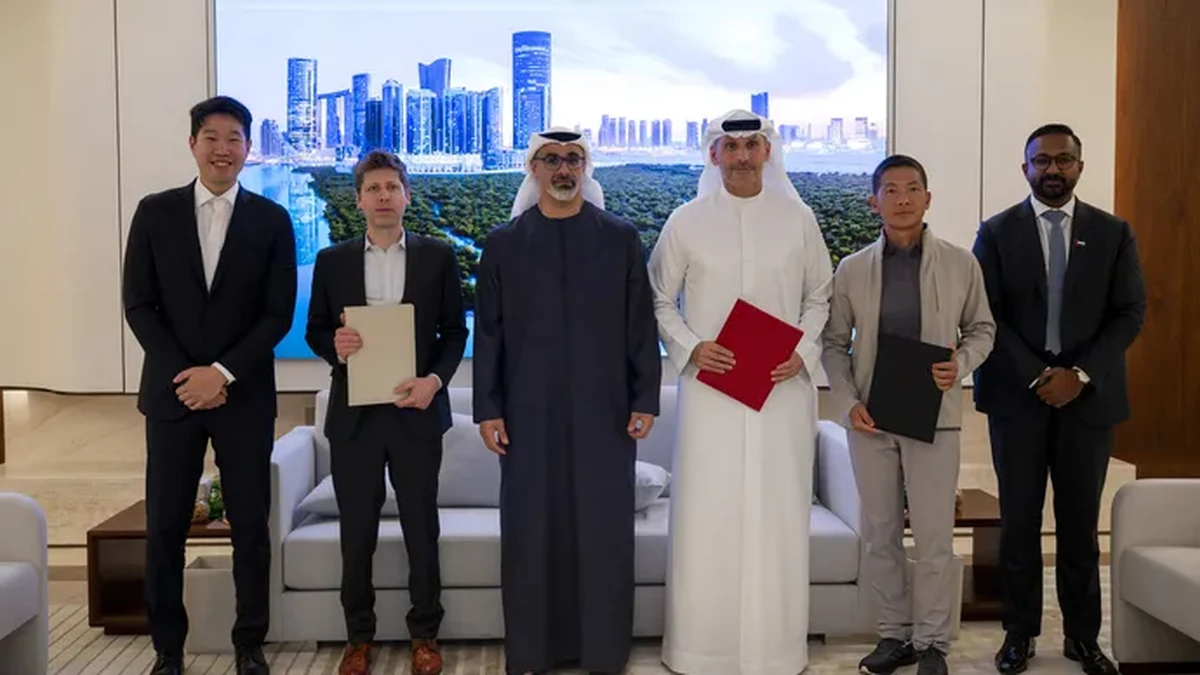
Abu Dhabi's Media Office announced on November 2 that local institutions had signed four agreements with OpenAI following a meeting attended by Crown Prince Khaled bin Mohamed bin Zayed and OpenAI chief executive Sam Altman. The arrangements cover government operations, energy, investment and broader AI adoption. Their common theme is using advanced models with inference infrastructure located in the United Arab Emirates.
In energy, ADNOC, G42's Inception42 subsidiary and OpenAI agreed to introduce frontier-model capabilities into operational, investment and commercial decision-making. The official announcement calls ADNOC the first energy-sector company to deploy OpenAI frontier technology. That priority claim comes from the parties, and the document does not supply independent productivity measurements or a detailed rollout timetable.
The government component is more concrete. Abu Dhabi says its Machine-Readable Government initiative translates selected rules and policies into forms that AI systems can use to support compliance assessments. The first pilot, with the Abu Dhabi Agriculture and Food Safety Authority, is already in production for food-import processes. The official description says officials retain responsibility for final decisions, an important distinction from autonomous rulemaking.
A third agreement brings Mubadala, Inception42 and OpenAI together on investment research, opportunity identification and risk assessment. A fourth is a five-year Inception42-OpenAI arrangement to support enterprise, government and education deployments. The announcement does not disclose contract values or spending commitments, so these agreements should not be treated as a quantified new financing round.
The significance is that Abu Dhabi is moving from isolated AI trials toward institutional arrangements with named operational settings and local inference. That creates potential advantages for data residency and public-service workflows, while raising questions about procurement, model accountability, auditability and reliance on one supplier. Only the food-import pilot is expressly described as live; the other arrangements remain commitments whose outcomes need later verification.