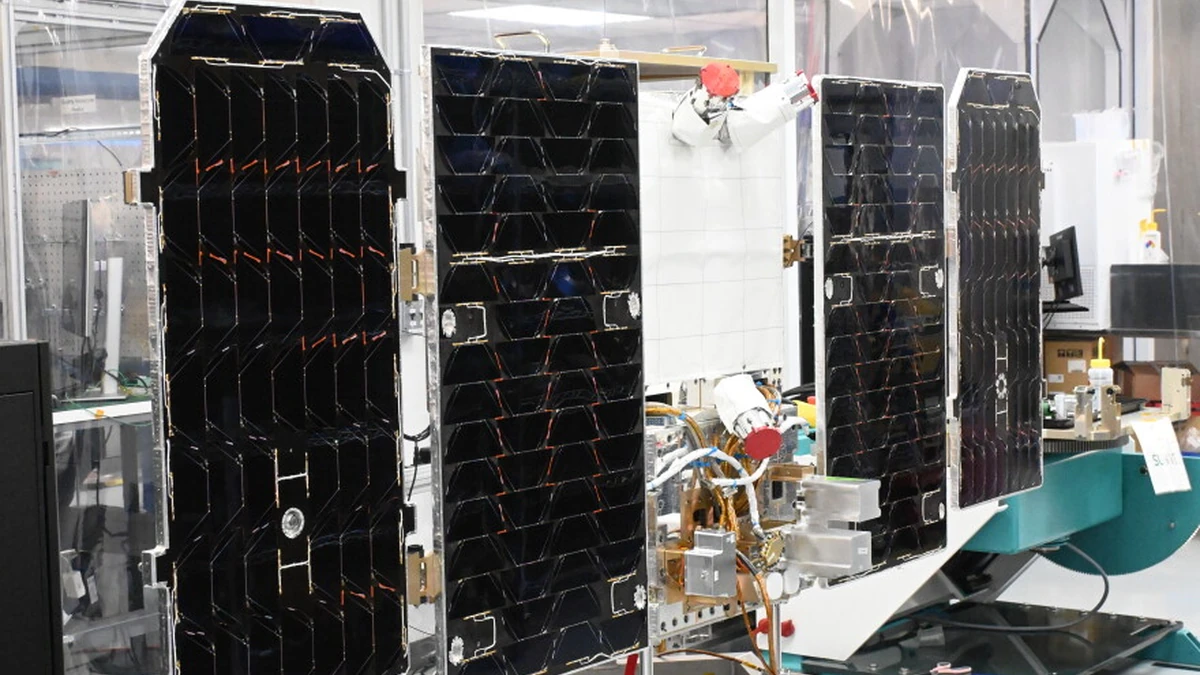
Google says its Project Suncatcher prototype has generated its first AI response from a data-center-class TPU in orbit. The October 30 update follows the satellite's October 1 launch with Planet and SpaceX, moving the experiment from initial contact and commissioning to an onboard inference demonstration.
During a ground-station pass, the team sent a prompt to an onboard Gemma 4 model and received a generated poem as the satellite passed Svalbard, Norway. Google reports subsequent tests with other creative prompts and payload telemetry. These are company-reported experimental results; they do not demonstrate a commercial orbital cloud service.
The distinction from the earlier launch announcement matters. Establishing contact showed that the satellite was functioning. Running a model on the payload is evidence of a further hardware-and-software milestone, although the public update does not establish sustained utilization, competitive cost or reliability over a full mission.
Google's next tests will examine TPU behavior under radiation exposure and thermal stress. Its engineering background describes cooling without atmospheric airflow and maintaining precise inter-satellite laser links as central challenges. The planned two-satellite milestone in 2027 remains a future step, not an already deployed network.
The existing photograph is retained because it depicts this same prototype at Planet Labs before launch. It is contextual hardware imagery, not a view of the satellite in orbit. The article preserves the original publication date while updating the account to reflect the newly reported test.