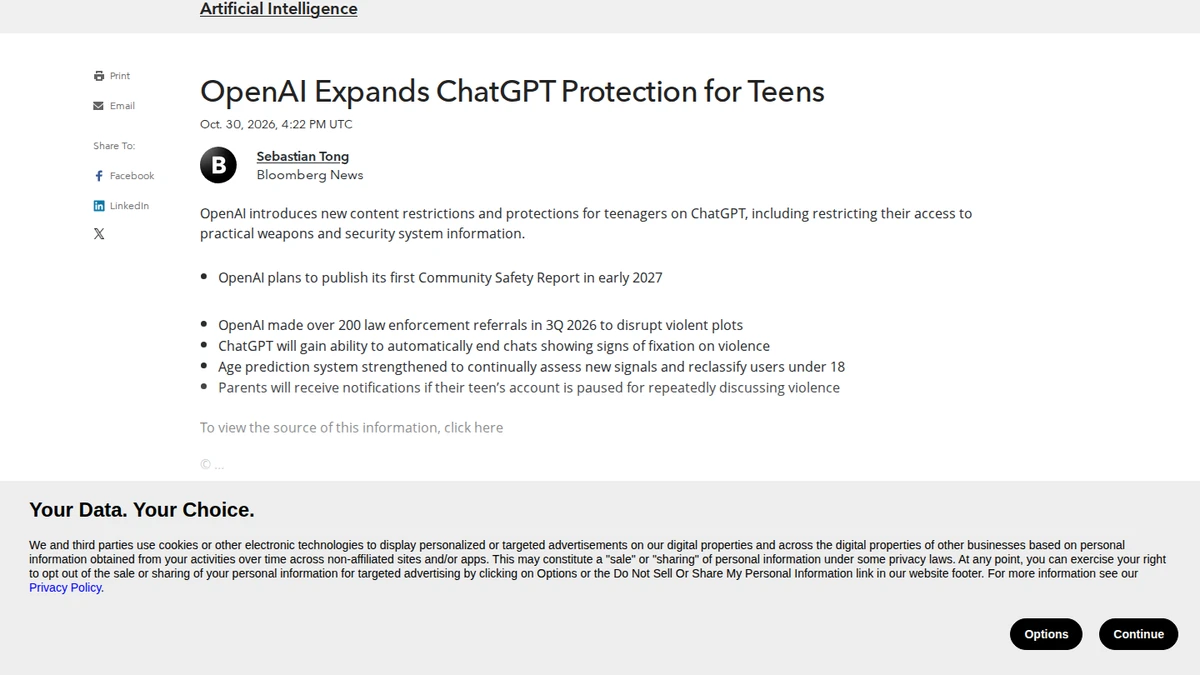
OpenAI announced new violence-related ChatGPT protections and a recurring Community Safety Report on October 30. Its first report is planned for early 2027, covering the second half of 2026, with updates every six months. The reporting commitment is future work, not a safety audit already published.
The company says it is tightening responses about past mass attacks for all users and placing further limits on practical weapons-related information for teens. Its existing teen experience applies stronger age-appropriate protections, while the new announcement extends restrictions in additional areas.
OpenAI also describes systems intended to use warning signs across recent conversations to respond more conservatively. Planned interventions include ending a concerning chat and potentially pausing an account after repeated interruptions. The announcement says the safeguards will begin rolling out over the following weeks.
The company reports making more than 200 law-enforcement referrals in the third quarter. That figure is OpenAI's disclosure, not an independently audited count or a measure of how many incidents were prevented.
The change matters because safeguards are expanding from individual prompt responses toward account-level patterns and real-world intervention. Their reliability, false positives and effectiveness require evidence beyond the announcement. The planned public reports could provide more visibility, but this article does not assume that the measures already eliminate risk.