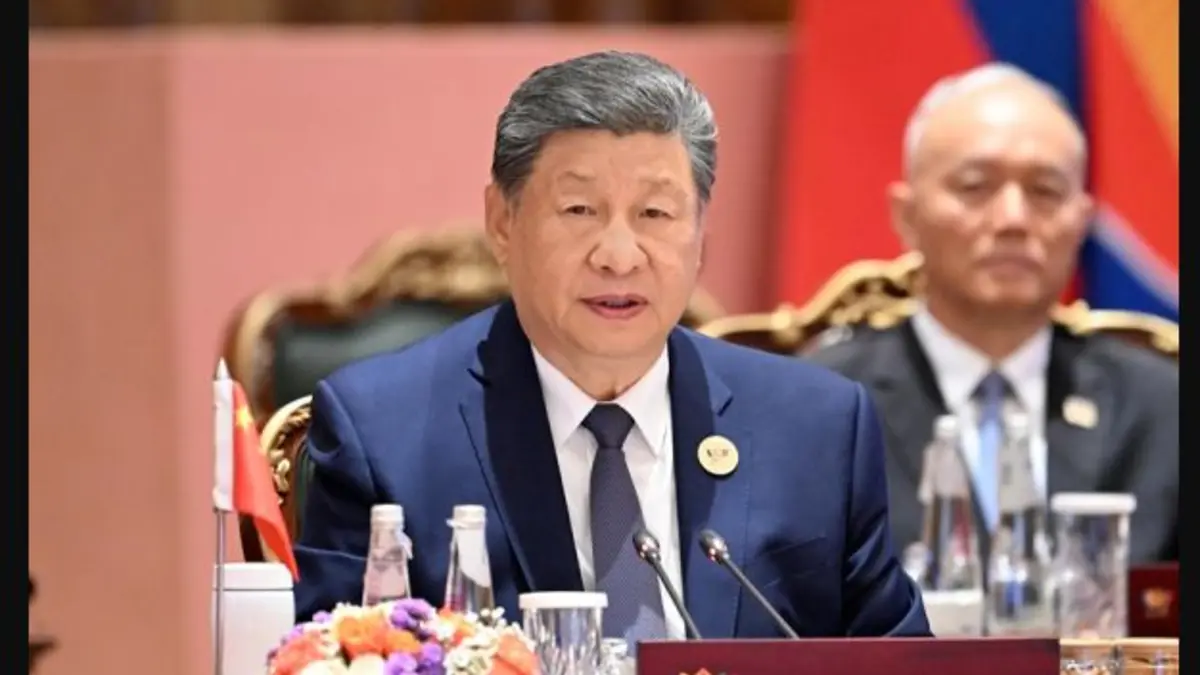
China is proposing a BRICS AI open-source community and a shared digital-ecosystem cloud platform, putting model cooperation and governance on the agenda of the bloc’s New Delhi summit. The Permanent Mission of China in Geneva said on September 13 that Xi Jinping proposed China pioneer the open-source community, alongside cooperation on large-language-model development and applications, training, and an open AI ecosystem.
A proposal for shared AI capacity
The same official account describes a proposed digital ecosystem cloud platform, engineer and youth exchanges, and smart-factory cooperation. It also calls for consensus-based global AI governance. Financial Express and the Indian Express independently reported the open-source-community and shared-cloud proposals, corroborating the substance of the Chinese statement.
Governance is part of the package
India’s Ministry of External Affairs published the BRICS New Delhi Declaration for the summit, providing the official host-country record alongside the Chinese mission’s account. Together, the records show that the initiative is being framed as multilateral cooperation rather than a single-company model launch, with skills, infrastructure, applications, and governance discussed together.
The proposal is not an operating cloud or funded deployment
The public statements describe an initiative and proposed mechanisms, not a live shared compute service, committed budget, model release, or implementation timetable. Participation, technical standards, data governance, financing, and access rules remain unresolved. The significance is therefore diplomatic and strategic for now: BRICS members are signaling interest in a more distributed AI ecosystem, while evidence of delivered infrastructure or production models has not yet appeared.