The latest earnings from Amazon, Alphabet and Microsoft show strong cloud growth as AI infrastructure spending expands. The releases cover the quarter ended September 30, although Microsoft calls it the first quarter of its 2027 fiscal year and the other companies report calendar third-quarter results.
Amazon reported AWS sales of $46.0 billion, up 39.3%, and AWS operating income of $17.8 billion. Those figures describe the full cloud segment; they are not a separate disclosure of revenue earned exclusively from AI.
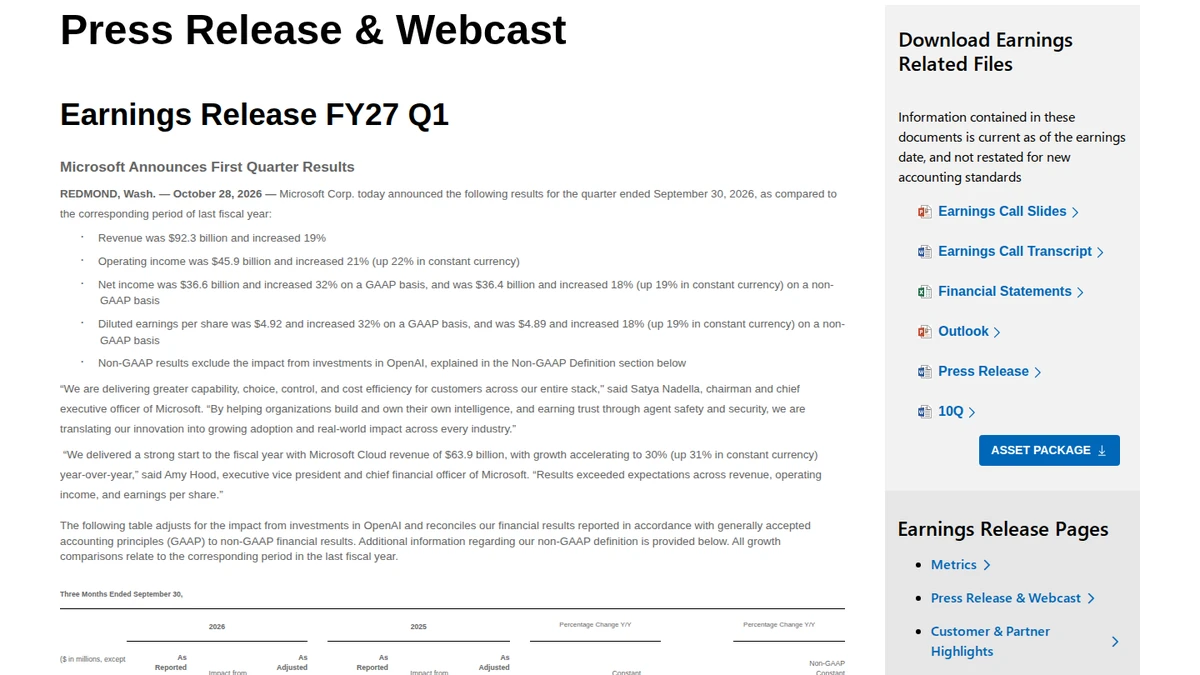
Alphabet reported Google Cloud revenue of $30.7 billion, up 103%, with AI infrastructure and solutions among its stated growth drivers. Microsoft reported Azure revenue growth of 48% and broader Microsoft Cloud revenue of $63.9 billion. The labels cover different product sets, so their growth rates should not be treated as directly comparable measures of identical markets.
Amazon's financial release also shows the cash demands of expansion. Trailing-twelve-month free cash flow was an outflow of $42.4 billion, alongside a $94.8 billion year-over-year increase in net purchases of property and equipment. Amazon says the increase primarily reflects AI investments; that wording does not make every dollar a separately audited AI expense.
The combined picture is demand growth accompanied by substantial physical investment. Reported revenue, annualized run rates, capital purchases and future spending commitments are different measures. The earnings support a conclusion about business momentum and resource demands, while the eventual return on today's buildout remains uncertain.