Oracle moved from a financing plan toward the capital markets on November 2 by filing preliminary offering documents covering senior notes and a concurrent $10 billion common-stock offering. The preliminary debt prospectus describes multiple fixed- and floating-rate note maturities and says the stock transaction is being offered separately. It does not guarantee either sale will close on the proposed terms.
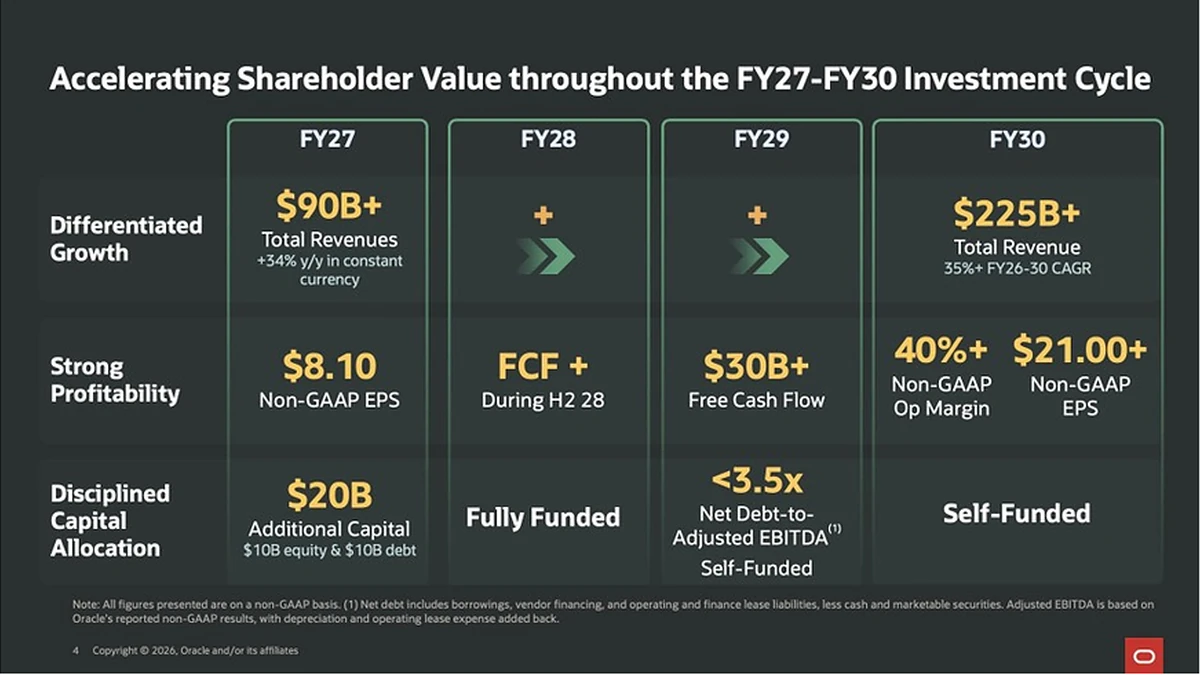
The move follows Oracle's October 28 investor-day commitment to limit additional capital-market funding for its fiscal 2027–2030 investment cycle to $20 billion, currently envisioned as $10 billion of equity and $10 billion of gross debt, excluding refinancing. That plan was in addition to a separate $20 billion at-the-market equity program Oracle said it had already completed in its first fiscal quarter of 2027. Mixing the earlier completed raise with the new proposed financing would double-count capital.
Oracle says proceeds from the proposed notes and equity sale, if completed, could support general corporate purposes including capital expenditure, debt repayment, investment and acquisitions. The preliminary filing leaves some note pricing and settlement fields open. The notes and shares may close independently; investors should not treat the combined headline amount as cash already in Oracle's accounts.
The financing is significant because building AI cloud capacity requires large upfront payments for chips, facilities, networking and electricity. At investor day, Oracle projected more than $225 billion of annual revenue by fiscal 2030 and at least $30 billion in free cash flow in fiscal 2029. Those are company forecasts contingent on execution, demand and the economics of its cloud contracts, not recognized revenue or cash flow today.
Oracle's offering documents also spell out financing risk. Its debt obligations are substantial, and the company may need to balance growth against borrowing costs, dilution and customer concentration. The November 2 filings are a concrete capital-markets step, but the amount actually raised, pricing, dilution and subsequent spending must be assessed from final terms and completed transactions.