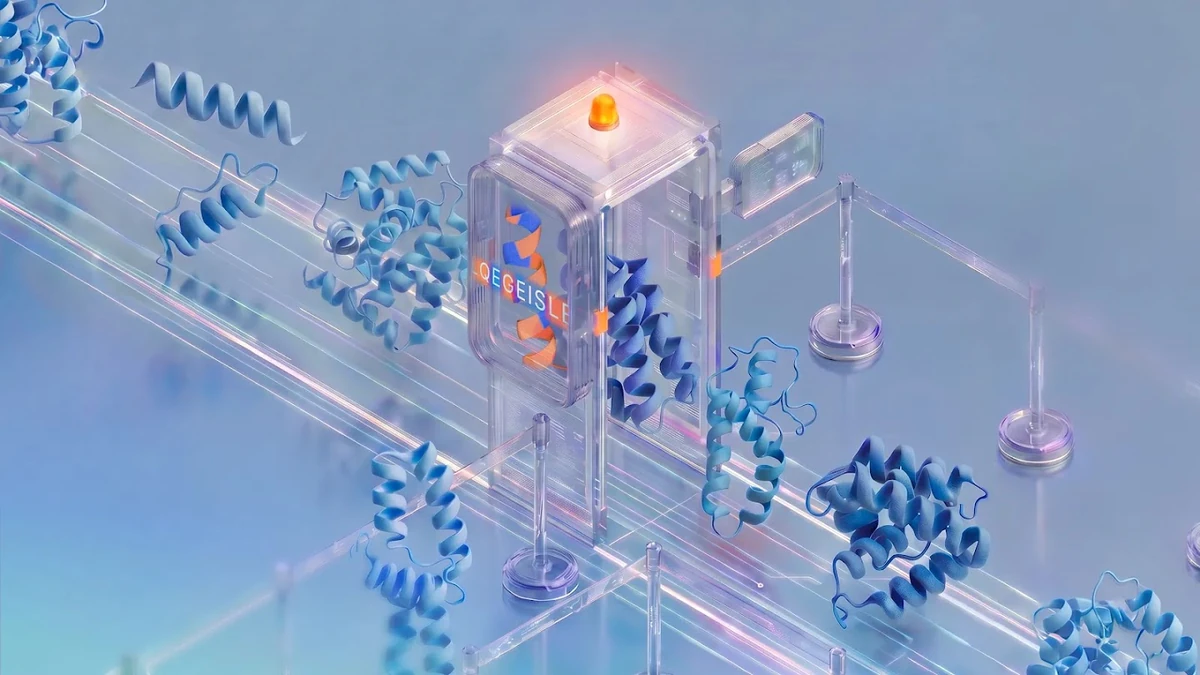
Google DeepMind introduced SynthID Bio on September 30 as a family of methods for watermarking AI-generated protein sequences and predicted structures. The goal is to attach a detectable provenance signal to biological outputs without materially changing their intended function.
Wet-lab evidence, with limits
The research team reports wet-lab tests on binders for VEGF-A, the SARS-CoV-2 spike receptor-binding domain, and PD-L1. In those experiments, watermarked designs matched the reported hit rate, binding affinity, and sequence diversity of unwatermarked designs. A companion method fine-tunes part of AlphaFold 3 to embed structure-level signals.
A proof of concept, not a deployed standard
The peer-reviewed Nature paper characterizes the work as a proof of concept and says real-world biosecurity use would require more innovation, coordination, and standardization. DeepMind is releasing methods, code, in-vitro data, and research weights, but the announcement does not establish ecosystem-wide adoption or resistance to sophisticated removal attacks.