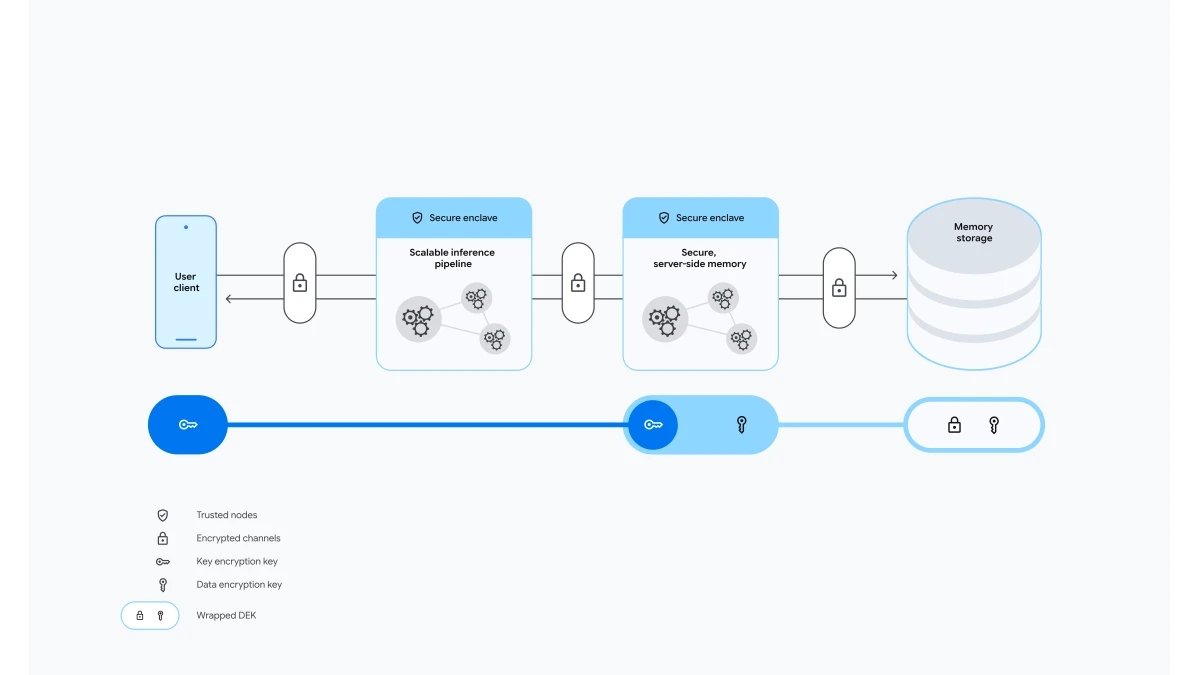
Google DeepMind published a technical update on September 23 describing server-side persistent memory for its Private AI Compute platform. The design is intended to carry selected context across devices while using encrypted storage and secure enclaves for cloud-side processing.
Keys remain on the user's devices, Google says
In Google’s described design, the information needed for assistance is stored in a per-user encrypted layer, with the cryptographic keys held on personal devices. An authenticated encrypted channel sends a request to an isolated cloud enclave, where data is temporarily decrypted for inference and then re-encrypted with any new context.
A technical design, not a general launch
Google says devices will be able to verify authentic, unaltered server software through a tamper-resistant public record and that the update includes results from an independent cybersecurity audit. The post points to a technical brief and verification materials, but the architecture’s deployment status and practical privacy guarantees were not independently tested here.